Dissertation (2018-2024)
Actualizing Virtual Worlds at Gaming Events
Gaming events are sites where digital and material worlds intertwine through embodied, multisensory practices. Grounded in ethnographic fieldwork, this thesis explores relational, sensorial ways of being-with audiovisual media that challenge separations between online and offline. Drawing on feminist technoscience, it rethinks dominant narratives around technology, the body, and agency in human–machine relations. The research develops a relational anthropology of contemporary entertainment economies, attentive to symbolic practices of inclusion and exclusion across digital and physical worlds. It highlights the potential of gaming events to foster inclusive spaces that resist toxic digital cultures and cultivate communal care, open-ended play, and improvisation. Methodologically, the project adopts an innovative multimodal approach; notably, the author uses comics to expand academic forms of representation and offer a sensory-rich approach to researching bodies in a digital era.
Materiality of Digital Technologies
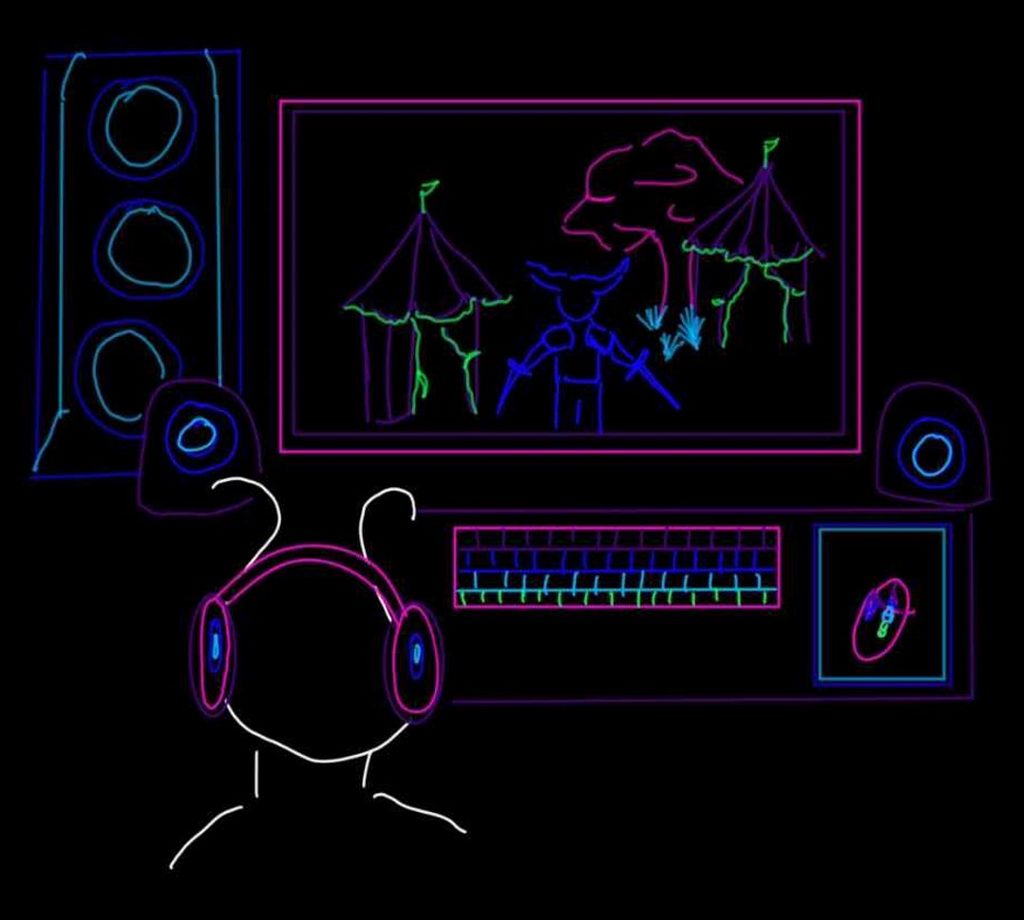
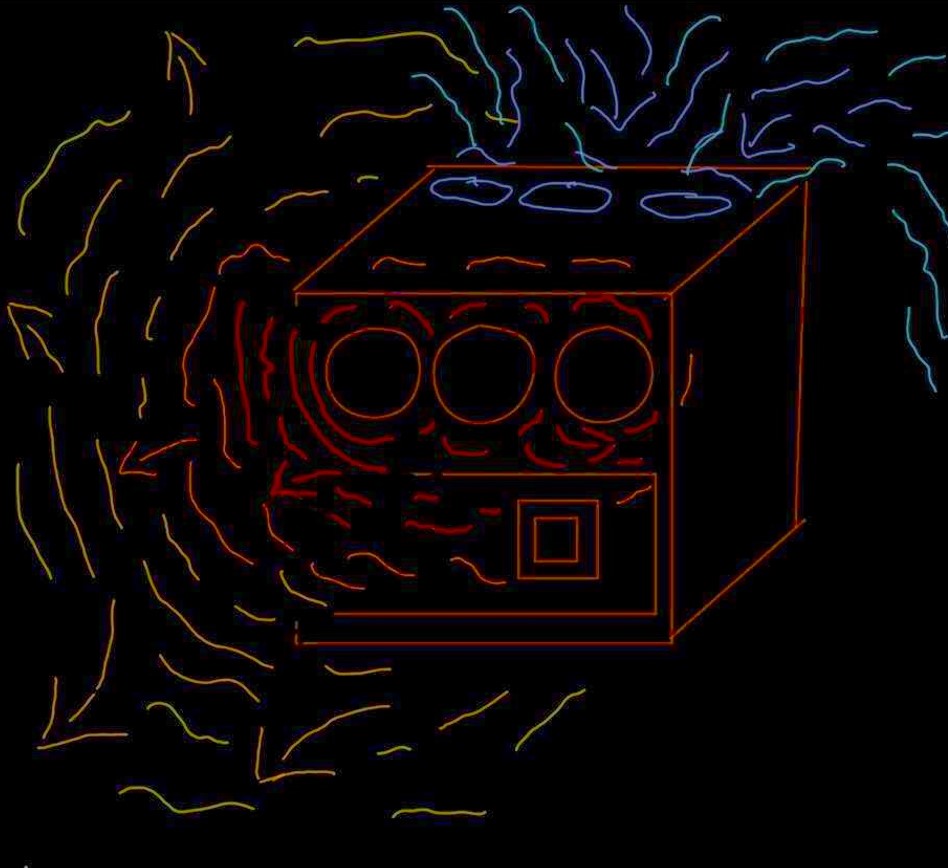
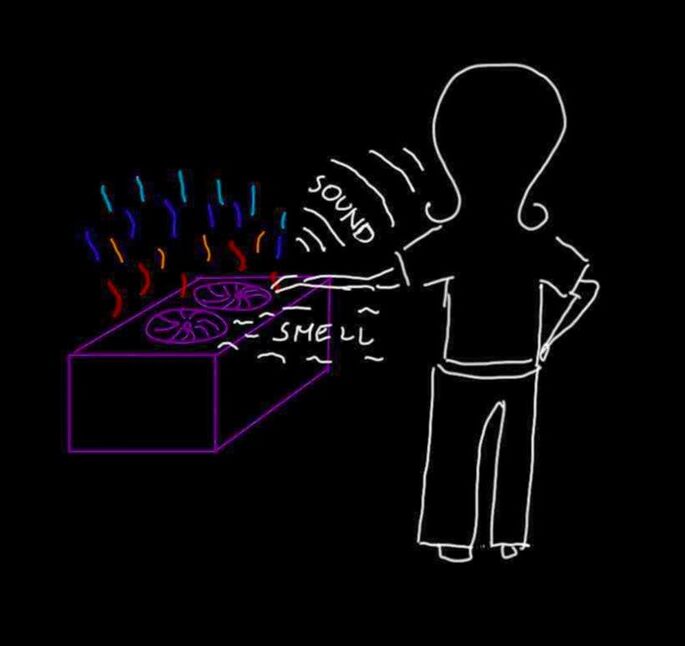
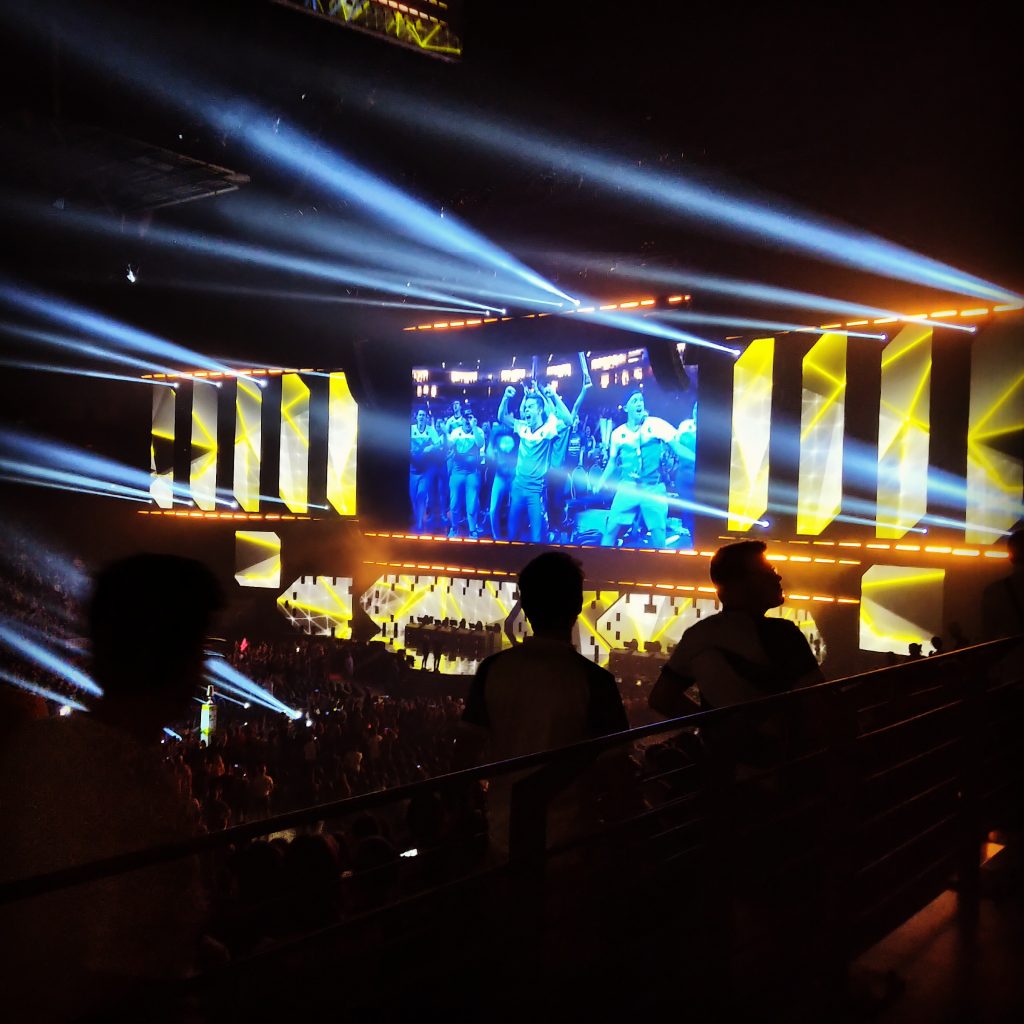
The happenings at events demanded theories that move beyond dualisms like online-offline (Taylor 2009), virtual-real (Boellstorff 2008), and body-mind (Mol 2021). I drew on semiotic-material (Haraway 1988) and material-discursive (Barad 2007) approaches to analyse entities not as pre-existing relata but trace how they emerge in relational processes. I understand bodies as part of the material world, in which humans swim in an ocean of materials (Ingold 2007). This perspective acknowledges human agency but emphasises how the world simultaneously acts on us (Keogh 2018). Part of the thesis included a close look at the materials involved in the becoming of events and asking with Karen Barad (2007) which matters matter and make a difference. I explore events as temporary, multisensory material patterns, asking which materials are present and how they participate in world-making. Rather than presenting events as static scenes, the comics invite readers to experience them as situated re-configurations, fleeting constellations of people, machines, light, and sound. They don’t provide a comprehensive analysis, but open up a fragmented and playful perspective on the material entanglements of gaming events and their implications for digital culture. Like how gaming events become real-life cyberspaces: physical actualisations of virtual worlds that simultaneously carry the traces of thousands of digital experiences. Readers are encouraged to follow a few neglected matters that matter: darkness, light, and machines. They are elemental matters of gaming, present in almost every situation at events and participating in re-enchanting matters to become more than the sum of their parts (Ritzer 2010). The thesis tells a story about the material conditions that make these exuberant, extravagant spectacles possible and how they are arranged and used as building materials by humans. Rather than offering a definitive account, the comics, complemented by text, invite readers to engage with the messy, entangled, and affective dimensions of human-technology relations.
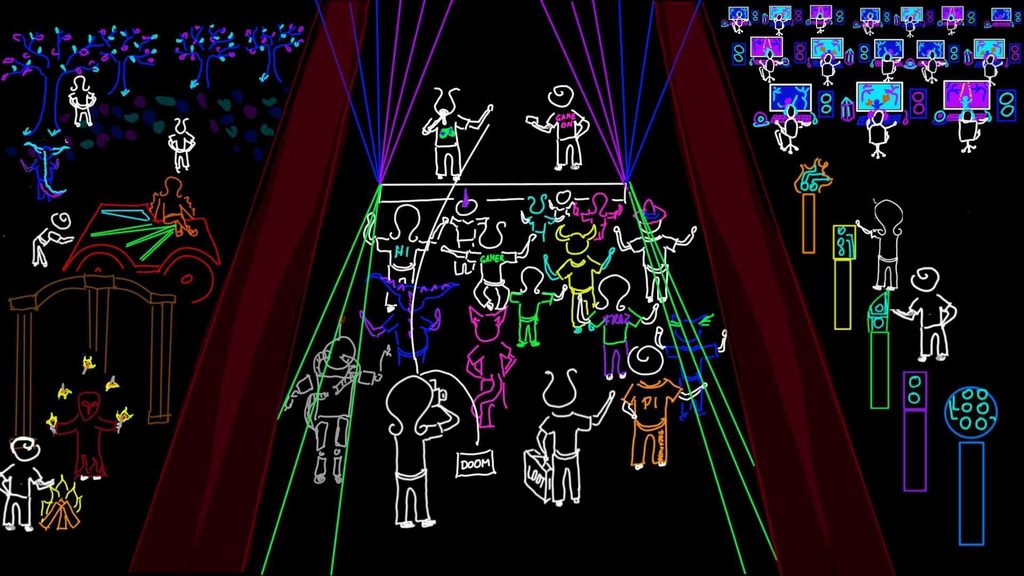
Methods: Praxeography & Multimodal Ethnography
The physically overwhelming experiences at these events shaped my analytical and methodical approach. As videogames build on exaggerated visual effects (Bareither 2020), the events similarly create aesthetics of extravagant visual impressions. Trying to make sense of my visually striking multimodal data collection, I began experimenting with additional visual modes of interpretation and using sketching as an analytical tool. Inspired by feminist technoscience and relational ontologies, this playing with methods was part of my theoretical approach.
My ethnographic research was situated in this hybrid field between “online” and “offline”, within the physically materialised culture of digital games at “real-life” events. “Classical” and “digital” ethnographic methods are interwoven, to follow a research field, that can’t be situated exclusively in- or outside “the digital” but is characterized by this interconnection. Computer games, social media, streaming platforms and team speak clients are just as much part of the field, as queuing in front of exhibition halls or gaming booths, crowds, as far as the eye can see, and cosplayers embodying digital characters. The challenge to combine ethnographic research of various layers of “digital” and “non-digital” happenings, while doing the field and its agents justice, is not limited to gaming events but raises more general questions for the anthropological research of theses hybrid fields. How can we tackle these collapsed distinctions between “online” and “offline” research? As field research intensifies through simultaneous happenings online, we also need to ask how we can document these multiple layers of interaction?
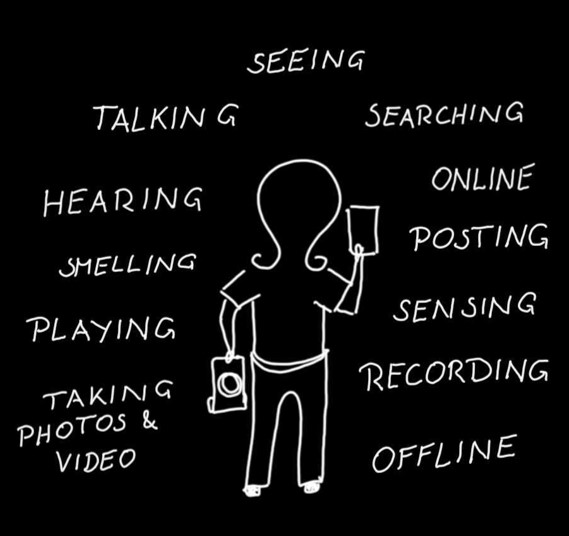
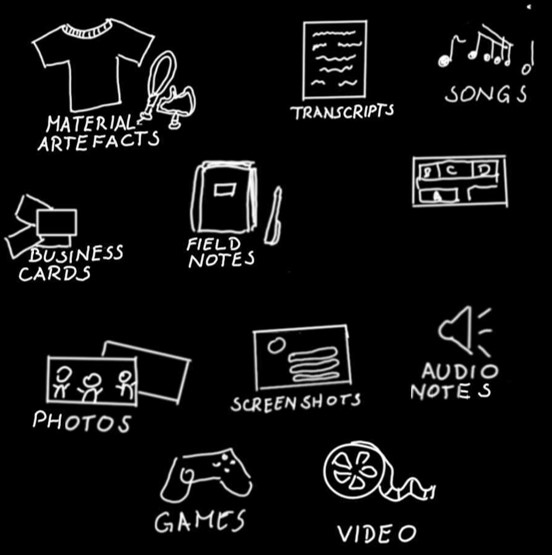
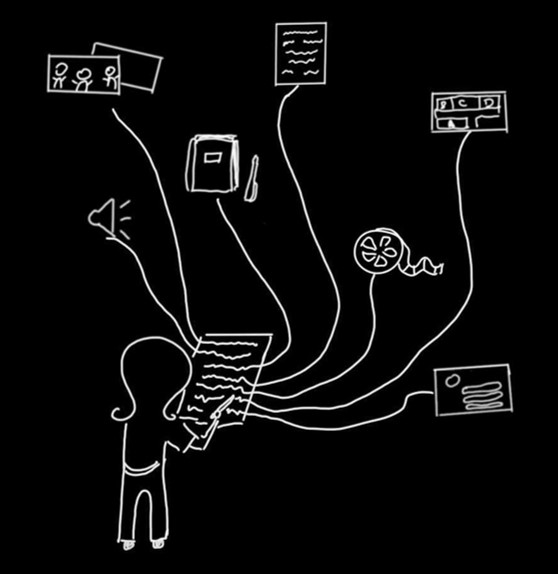
What is a Gaming Event?
Hundreds of thousands of people gather regularly at Gaming Events to celebrate digital gaming in embodied encounters. The events provide material environments of and for digital culture and materialise virtual worlds. What I call Gaming Events (GE)[1] does not have one clearly distinguishable form. I use the term to describe a particular type of large-scale entertainment event for gaming[2]. They raised my interest as digital anthropologist because they unfold through peculiar, even contradictory, premises:
(1) Currently, many everyday practices and processes are transferred to digital realms (intensified during the COVID-19 pandemic). GEs do the opposite by providing places in and of the material world to engage in digital practices in embodied co-location. Why are these embodied encounters so significant for a digital practice like gaming?
(2) LAN parties, as the predecessor of contemporary GEs, emerged from the technological requirement of physical co-location to play with others. This premise changed with the spread of the internet, enabling online multiplayer gaming. Despite this, GEs expanded in number and size and became large-scale events for gaming, with increasing numbers of events held globally. What is it about GEs that makes them appealing to so many people?
(3) Earlier LAN parties as community events have been commercialised and eventified, as Vogelsang (2003, 11) predicted, turning into what Betz et al. (2017, 1) call hybrid events, each featuring a conglomerate of different event formats. Contemporary GEs are often brands that offer large-scale entertainment events owned by multinational companies that conduct many events globally. However, my interlocutors describe their embodied experiences with material environments at these GEs as overwhelmingly great, ecstatic feelings and GEs as incomparable, almost magical places that allow them to grow beyond themselves in ways they do not experience anywhere else. How do the embodied encounters in material environments allow these processes of growth? How is this possible at a massive commercial entertainment event?
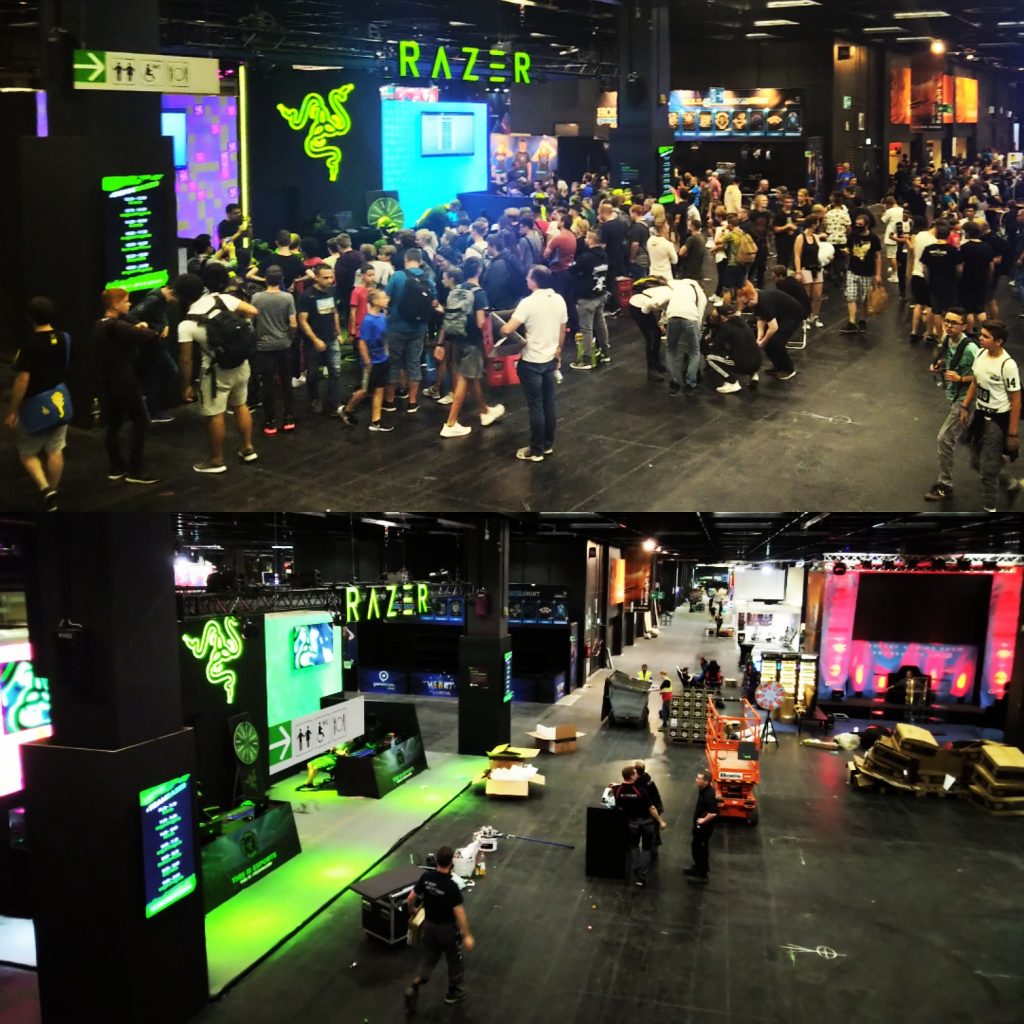
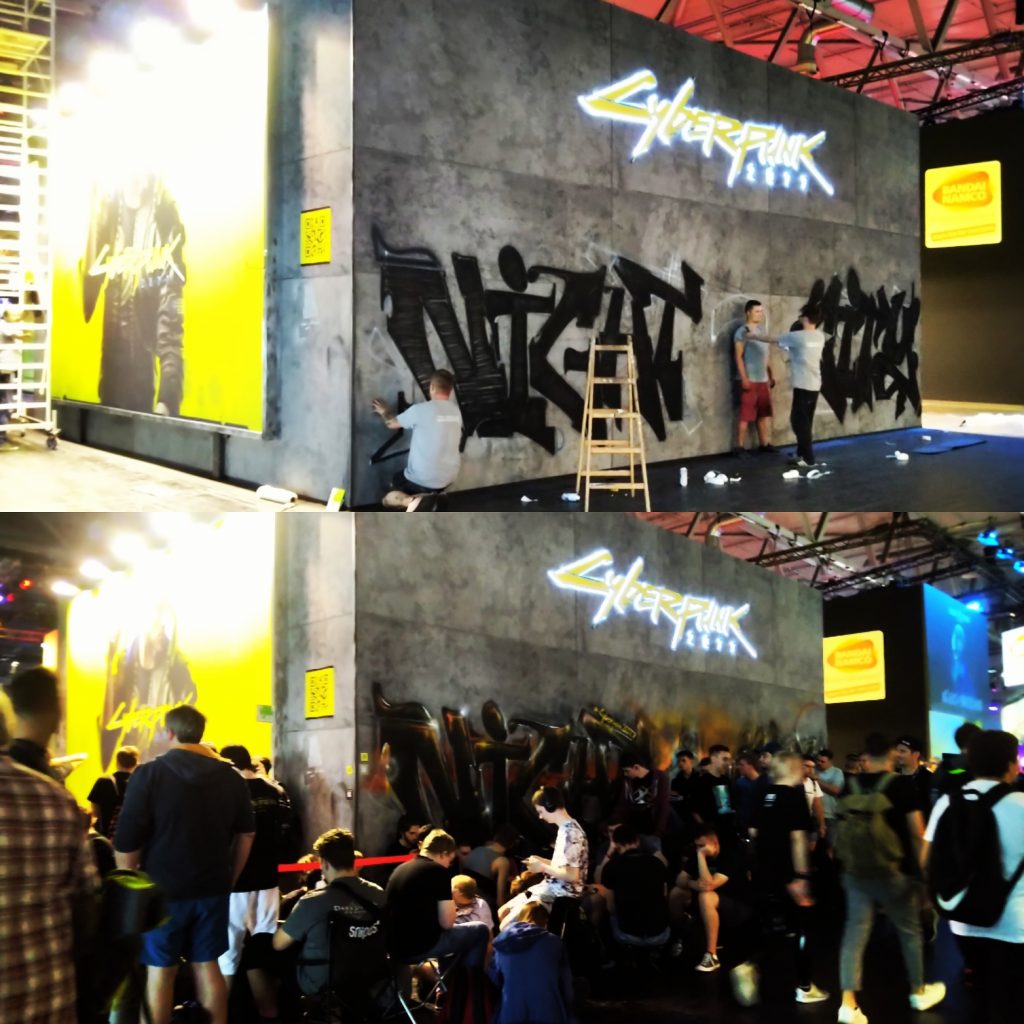
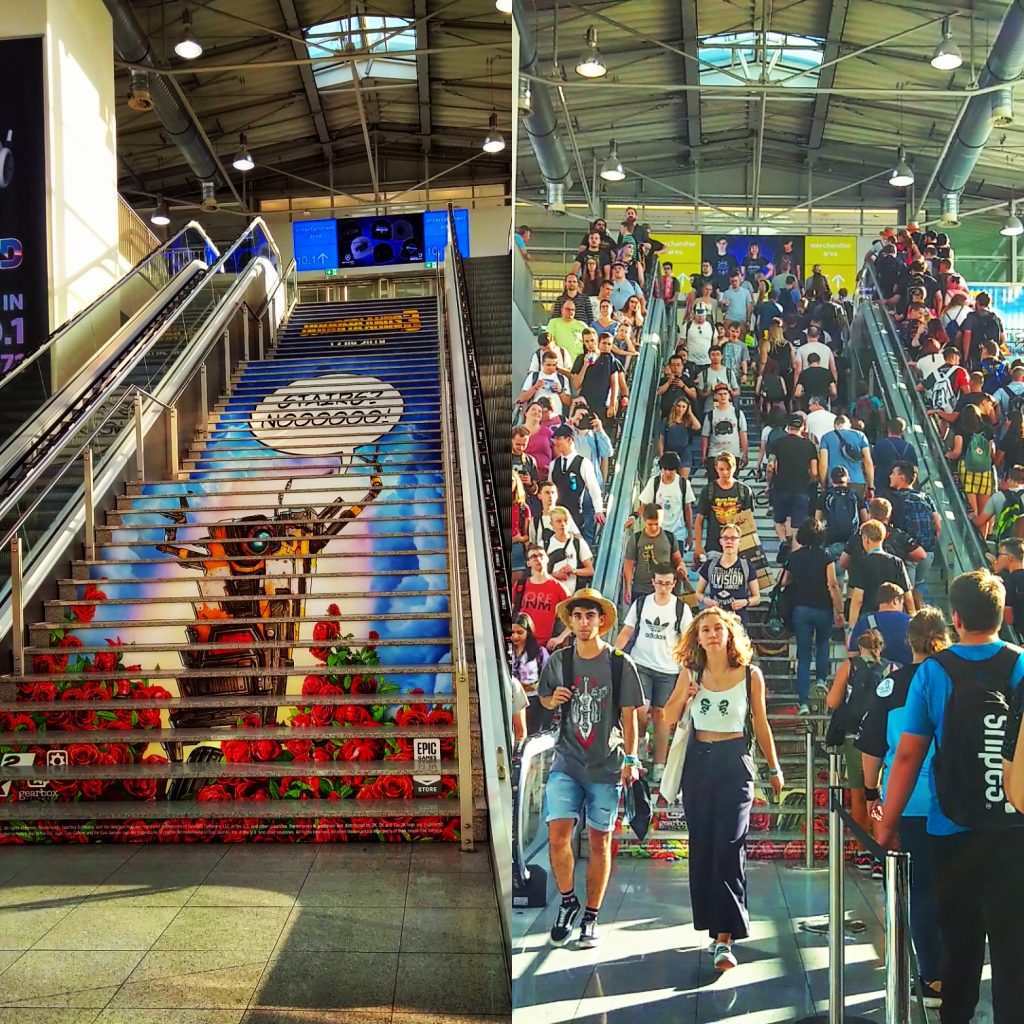
With a praxeological, cultural-analytical approach, this project examines (everyday) practices, interactions and negotiations in their larger socio-political context, as they exemplify a wide range of challenges posed to digital anthropology. As the field of gaming events combines “digital” and “real-life” practices in a unique way, they reveal several dynamics, that are paradigmatic for the merging of “online” and “offline” practices. Even though bodies are treated as a relatively unimportant factors in digital gaming, they become significant in many particular ways in the context of gaming events. Digital experiences of gaming are suddenly “embodied” at those events. The “embodiments” of digital worlds can be seen in cosplays, fan clothing or tattoos, which are practices connected to the identity as a gamer for the research participants, but at the same time serve as advertising measures for companies and exhibitors at the events.
Despite their conflicting developments and growing popularity, GEs have not yet received much academic attention. Ethnographic studies on gaming practices and culture included some events as a fieldsite (Bareither 2016; Koberg 2021) and Law (2016) explored which type of gamers participate in such events, but I am interested in the events as a phenomenon on their own, particularly in the embodied experiences and materiality of a digital practice. The relevance for empirical research of GEs emerges from (1) the call for a more-than-digital anthropology (Klausner 2022) that studies contemporary digital culture in embodied and material forms. (2) The ubiquity of games facilitated by the digitalisation of everyday life (Dippel and Fizek 2017, 277), through which “the information age has, under our noses, become the gaming age.” (Boellstorff 2006, 33), and the need to ethnographically explore Cultures of Gaming with an anthropological notion of culture that critically opposes “overly symbolic or semiotic approaches to culture” (Boellstorff 2006, 32), which are predominant in game studies. (3) The aesthetic potential of commercial mass culture as the basis for its prominent role in Western societies (Maase 2022,12) and the surge in aestheticisation of everyday life that scholars have been pointing out for decades (Hieber and Lutz 2014; Maase 2022; Reckwitz 2012; Schulze 2005) and how gamers enact overwhelming pleasurable experiences in institutionalised, commercial entertainment settings, that changed from community event into scalable businesses (Tsing 2016, 37) in just a few years. I understand GEs as exemplary sites to explore the embodied experiences and materialities of digitalities in their entanglements with capitalism and ludic practice, as shared practices (Maase 2022,74localThis draws on Taylor and Witkowski’s (2010, 201) explorations of Dreamhack as a Mega-LAN, Moreover, since events have expanded and changed further since then, I trace the historical transformations of the oldest Dreamhack event, with a history of more than three decades, to understand the current forms of material environments of these hybrid entertainment spectacles. (3) I will explore GEs as a cultural phenomenon, combining cultural analysis with Agential Realism (Barad 2007), analysing entanglements of matter and meaning and bodies with worlds, and questioning a priori relata and dichotomous concepts. This is based on Taylor’s (2009, 153) emphasis on how dichotomous models segregating between virtual and real, game and non-game, are fundamentally challenged at events. Similarly, many of my interlocutors describe their embodied experiences with material environments at GEs as something that cannot be adequately grasped with dichotomous concepts and dualistic vocabulary. This poses the question: which concepts are suitable to think these relations with? To tackle these problems, I adopt a relational approach.
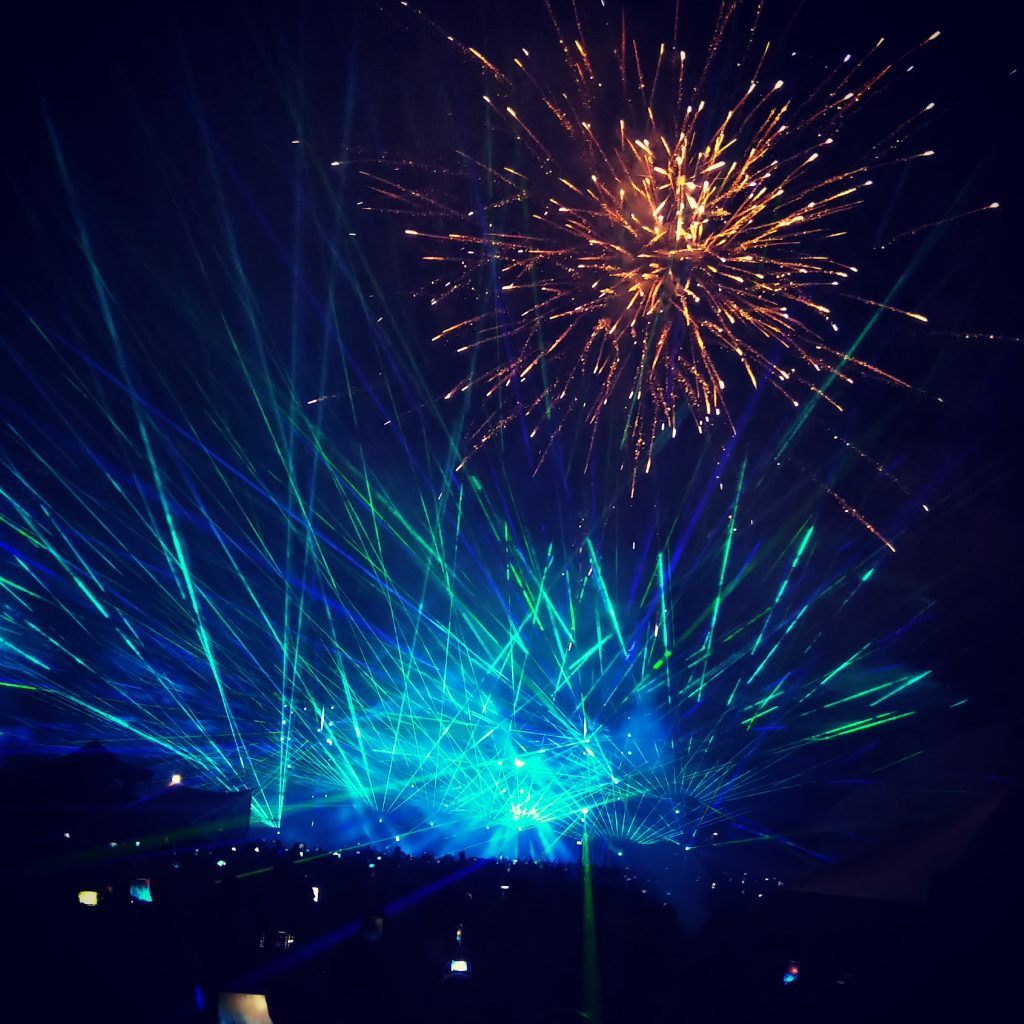
The thesis tells the story of GEs as a contemporary cultural phenomenon (enacted as such by the researcher). While GEs do not exist in one distinguishable form, they share specific characteristics I will explore. Describing them as a cultural phenomenon draws on Löfgren’s understanding of cultural analysis as the process of “examining what is thinkable in our own culture“ (Löfgren 1981, 26) and tracing how things become thinkable. I define a phenomenon with Barad as something enacted in ongoing re-configurations of which humans, including me as a researcher, are part (Barad 2007, 206). The contribution this thesis makes emerges from this combination of a cultural anthropological approach to ethnographically trace human practices and how things make sense to people (McGranahan 2018, 2), with approaches frequently summarised as new materialism (Hoppe and Lemke 2021), that transcends the separation of meaning and matter. I draw on Haraway’s (1988, 585) semiotic-material and Barad’s (2007, 206) material-discursive approach, in which meaning and matter are co-constituted in reciprocal processes. I ask: How are matters coming to matter at GEs (how are they enacted), and how do they matter? Which matters make a difference for the embodied experiences in situated re-configurations at GE? This raises the following questions: How are the material environments at GEs re-configured through embodied practices (enactments)? Which materials matter, and which meanings are unfolded through these matters? How (in which ways) are humans and non-humans participating in these enactments? These questions explore how GEs take their material shapes through the interplay of humans with the material world as enactments. I trace bodies with material worlds as de-centred relational processes of co-constituting each other. I ask how different material and immaterial things are unfolding in processes (not fixed), as a doing (practice) with the world (enactment), and how embodied practices with material environments are coming into being as be-comings, combining being and doing.
As an ethnographer, I trace the practices of people with material environments, drawing on Knecht’s (2012) proposals for a praxeography. It is a specific understanding of ethnography that does not only follow people but practices (doings) and processes (transformations) (Knecht 2013, 98) as constellations of practice (Knecht 2012, 259) and asks who and what participates (Hirschauer 2004, 74). I explored different GEs in Central and Northern Europe through multimodal (Dicks et al., 2006) ethnographic fieldwork over the course of two years (January 2018 – March 2020) with a follow-up after the COVID-19 pandemic (2022 – 2023). The arguments I make about GEs in this thesis are not to be generalised but refer to a selection of 14 European events that share many characteristics. This sample selection started out with all the large-scale events held in Germany during this period, including Gamescom, the biggest GE worldwide. Following the practices of my research partners in a multi-sited approach (Marcus 1995; Hannerz 2003), I included several GEs matching the sampling criteria in nearby European countries. This included the oldest GEs, Dreamhack, in order to trace its history and transformation from a community event to a commercial enterprise. Each event is a situated phenomenon on its own. In order to avoid advertising, I refer to these GEs without overemphasising the brand names of specific events. Rather, I seek to highlight certain qualities, properties and features that be-come significant for my interlocutors throughout different events.
[1] I chose this broad name as an umbrella term at the beginning of my research, when individual events were still advertised under a variety of labels (e.g., events for gamers, festivals for gaming, videogame conventions, LAN parties, or esports tournaments). However, it has since become a more popular term and is frequently used to advertise individual events and online overviews of events held (like event calendars).
[2] Gaming in this thesis refers to the practice of playing digital videogames, including computer (PC), console, and mobile games, but not analogue card or board games, which are present but not a focus in this project.
Publications
2026 Comic: On the Materiality of Cyberspaces. In: Comics as Media of Knowledge. Journal for Cultural Analysis and European Ethnology, Waxmann.
2025 Das Unfassbare Material Digitaler Spiel-Kultur. Dunkelheit, Licht und Luft als elementare Stoffe von Gaming Events. In: Ute Holfelder, Roland W. Peball, Janine Schemmer, Klaus Schönberger (eds.), Alltage und Kultur/en der Digitalität. Zeitschrift für Volkskunde 31. Waxmann, pp. 75–96.
2025 Playing in the In-Between: Practices of play, rituality and beyond at computer game festivals. In: Cliona O’Carroll, Simon Poole, Jakob Löfgren, Audun Kjus, and Ida Tolgensbakk (eds.), Adventures from the play-ritual continuum (‘Ritual, Festival and Celebration’), University Press of Colorado, pp. 125–142.
2023 Multi-präsentes Ethnografieren. Ethnografische Anwesenheit in mehr-als-digitalen Feldern. In: Martina Klausner, Dennis Eckhart (eds.): Digital[ität] Ethnografieren. Forschungsmethoden für den digitalen Alltag. Kulturanthropologie Notizen 85/2023. pp. 96-110. Online: https://ka-notizen.de/index.php/ka-notizen/article/view/18/20
2021 Becoming a Gamer: Zwischen Teilhabe und Konsum, Kommodifizierung und Agency, In: Johannes Moser, Gertraud Koch, Lara Hansen (eds.): Welt.Wissen.Gestalten, Hamburger Journal für Kulturanthropologie HJK (13), pp. 621-630. Online: https://www.researchgate.net/publication/360458169_Becoming_a_Gamer_Zwischen_Teilhabe_und_Konsum_Kommodifizierung_und_Agency
Talks
2023 Digital Gaming Matter: Verkörperte virtuelle Welten. Lecture series: Die Welt mit anderen Augen sehen: Why Anthropology matters, 29.06.2023, University of Bonn, Germany.
2023 A Place like Cyberspace. Verkörperte Digitalitäten bei Gaming Events. Conference: Alltag der Digitalität, ögekw-Tagung, 18-20.05.2023, Klagenfurt, Austria.
2023 Digitales Spiel–Material: Gaming Events zwischen Virtualität und Materie. Lecture series: Digitale Anthropologie: Exemplarische Felder und interdisziplinäre Schnittstellen, 27.04.2023, University of Tübingen, Germany.
2023 Multi-präsentes Ethnografieren. Hybriden Gaming Events ethnografisch auf der Spur. Lecture series: Digital(ität) ethnografieren? Methoden für den digitalen Alltag, 25.01.2023, University of Frankfurt (Main), Germany.
2022 Digital Worlds “In-Between”: Practicing Hybrid Futures at Computer Game Events. Conference: Digital Futures in the Making: Imaginaries, Politics, and Materialities, 15.09.2022 – 16.09.2022 University of Hamburg, Germany.
2022 Gamers’ Play-Grounds. Practices of Play(ing) and Beyond at Video Game Events. Online-conference: Video Games as a Common Ground, 2-3.9.2022, University of Zadar, Croatia.
2022 Embodying Gaming. Entangling virtual and actual at computer game festivals, lecture, 03.05.2022, University of Zadar, Croatia.
2021 “Becoming Bigger than Myself”. Embodying Digital Gaming between Ritual and Play. Conference of Societé Internationale d’Ethnologie et de Folklore (SIEF) 2021, 19-24.06.2021, Helsinki, Finnland.
2021 Serendipity und Lucky Chances – Playfulness im Event Kontext, lecture series: Playing Video Games, 20.1.2021, University of Jena, Germany.
2021 Digital Gaming Embodied. Ethnographic Serendipity and Lucky Chances at Gaming Events. RustLAB lecture series: Data & Experimentalism. 14.01.2021. University of Bochum, Germany.
2020 Truths about Gaming. Ethnographic perspectives on truth-making “online” and “offline”. Conference: Digital Truth-Making. Ethnographic Perspectives on Practices, Infrastructures and Affordances of Truth-Making in Digital Societies, 7.-10.10.2020, University of Berlin, Germany.
2020 Exploring the “In-Between”. Reflecting ethnographic methods at Gaming Events. Conference: 16th EASA Biennial Conference, „New anthropological horizons in and beyond Europe“, Virtual Lisbon conference, ISCTE-University Institute of Lisbon and ICS-Institute of Social Sciences, 20-24.07.2020, University of Lisbon, Portugal.
2020 Spiel_Material. Zur ,Middle-Zone‘ zwischen Medien und Materie. Conference: DIS(S)-CONNECT II | Wie Medien uns trennen und verbinden. Interdisziplinäre Doktorand*innen-Tagung, 16-18.04.2020, University of Vienna, Austria.
2020 Spiel-Räume. Interferenzen von digitalen und materiellen Raum- und Körpererfahrungen bei Gaming Events. Conference: “Technocultures & Technoscapes”, 30.1.-1.2.2020, University of Bonn, Germany.
2019 Branding Gamers‘ Bodies: Verknüpfungen von Teilhabe und Konsum, Kommodifizierung und Agency im Kontext von Massen Gaming Events. Conference „Welt-Wissen-Gestalten“ der deutschen Gesellschaft für Volkskunde 2019, 7-10.10.2019, University of Hamburg, Germany.
2019 real.life.gaming.events. Kulturanthropologische Überlegungen zu ambivalenten Gaming Praktiken zwischen Krieg und Geborgenheit. PHD Symposium: Fahnenflucht aus digitalem Kriegsgebiet, 24.10.2019, University of Arts Linz/Donau, Austria.
2019 Gamers‘ Bodies – Die Produktion von Subjekt, Körper und ,Immersion‘ als performierte Vergnügungserfahrungen im Kontext von Gaming Events. Conference: DIS(S)-CONNECT | Wie Medien uns trennen und verbinden, 25.–27.04.2019, University of Mainz, Germany.